How AI Can Help Unlock a Clean-Energy Future
⚡ Tackling the Grid’s Growing Complexity
Today’s power grids are far more complex than the “big plant → predictable demand” model of the past. Renewable sources like solar and wind add volatility, and threats such as extreme weather and cyberattacks make stability harder than ever.
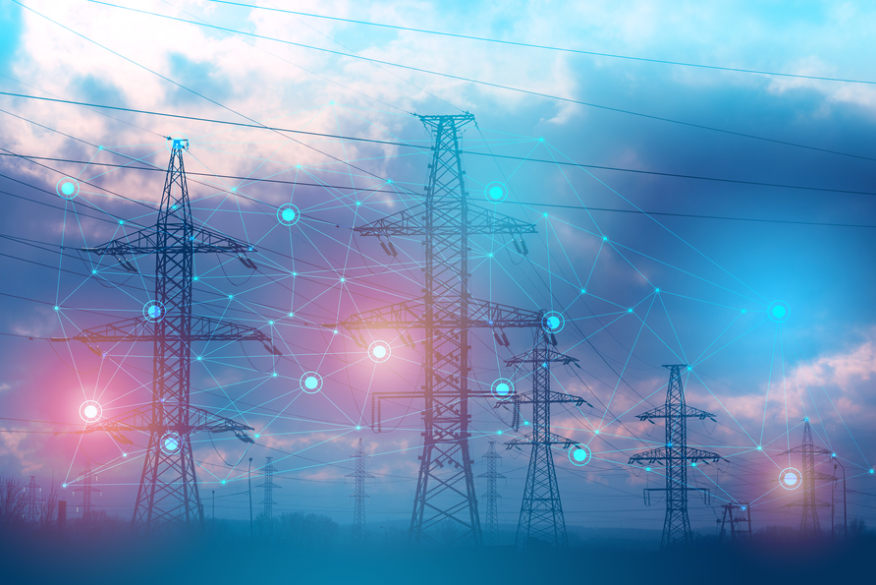
AI changes the game by continuously monitoring supply and demand, balancing variable power sources, and maintaining stable voltage and frequency in real time.
Smart grid systems empowered by AI-driven analytics can also tap flexible energy sources like EV batteries or rooftop solar or shift demand (e.g., smart thermostats, data-center workloads) when the grid is under stress.
And thanks to predictive maintenance algorithms, utilities can detect equipment issues early, prevent failures, and extend infrastructure lifespan reducing outages and increasing reliability.
🔭 Planning Smarter for Future Energy Needs
Building out generation, storage, and transmission often means planning a decade or more ahead. With renewables and climate change altering demand and risk, traditional forecasting is no longer enough.
AI-powered modeling simulates countless scenarios — from high renewable penetration to extreme weather — helping utilities anticipate future capacity, storage, and transmission needs.
AI tools also streamline regulatory and planning work: large-language models can analyze regulatory documents, climate data, and environmental reports, helping developers craft stronger proposals and speeding up project approvals.
🧪 Accelerating Materials Innovation for Clean Tech
Clean energy depends on advanced materials — better batteries, more efficient solar cells, stronger reactor components, and more. But traditional materials discovery often takes decades.
With AI-driven simulations, scientists can analyze atomic-scale behavior, predict performance, and identify promising materials dramatically faster.
In some labs, AI guides experiments in real time — suggesting the next step, coordinating robotic systems, testing results, and learning from outcomes. This active-learning cycle accelerates discovery and reduces trial-and-error work.
The result: innovations that once took decades may now emerge in just a few years.
🏛 The Role of Research, Collaboration & Institutions
Institutions like the MIT Energy Initiative (MITEI) are driving major progress from AI-optimized grid planning and fusion modeling to materials discovery and reducing data-center energy consumption.
MITEI’s 2025 symposium, “AI and energy: Peril and promise,” brought together experts across sectors to explore how AI can be both a challenge and a solution for the world’s energy systems.
By convening researchers, industry, and policymakers, these initiatives ensure that AI’s benefits aren’t siloed — but instead support a coordinated, system-wide energy transformation.
✅ Why This Matters Now
AI’s energy demands are real but so are its opportunities. As data centers expand and computing needs surge, pairing that growth with AI-driven energy optimization, smarter grids, and accelerated clean-tech innovation can prevent higher emissions and instead speed the transition to a clean, resilient future.
AI doesn’t have to be the problem. With thoughtful design, collaboration, and investment, it can become a central part of the solution.