Data and Artificial Intelligence in Today’s World
Technology is changing our world at an incredible speed, and at the center of this transformation are data and artificial intelligence. These two elements work together in ways that influence almost everything we do each day. From the moment we wake up and check our phones to the time we go to sleep after watching videos or messaging friends, data is being created constantly. This information may seem small or unimportant on its own, but when combined, it becomes extremely powerful. Artificial intelligence uses this data to learn, improve, and perform tasks that once required human effort and decision making.
Data is simply information. It can be numbers, words, pictures, sounds, or videos. Whenever someone searches for something online, posts on social media, plays a game, or uses a smart device, data is generated. Companies and organizations collect this information to understand patterns and improve their services. Over time, these collections grow into very large datasets. The world today produces more data in a single day than was produced in many entire years in the past. This rapid growth is one of the main reasons artificial intelligence has advanced so quickly.
Artificial intelligence, often called AI, refers to computer systems that are designed to perform tasks that usually require human intelligence. These tasks include recognizing faces in photos, understanding spoken language, translating between languages, recommending videos, solving problems, and even creating content. AI systems learn by studying large amounts of data. They look for patterns, relationships, and trends. The more data they analyze, the more accurate and intelligent they become. This ability to learn from experience makes AI different from traditional computer programs, which only follow fixed instructions.
Today, AI is deeply integrated into everyday life, even if people do not always notice it. When a music app suggests songs you might like, when a navigation app finds the fastest route through traffic, or when an email system filters out spam messages, AI is working behind the scenes. Virtual assistants can answer questions, help with planning, and provide information in seconds. Tools like ChatGPT demonstrate how AI can communicate in natural language, making it easier for people to learn, create, and solve problems.
The rapid growth of digital technology has made AI even stronger. Smartphones, social media platforms, online shopping websites, and connected devices all generate continuous streams of data. This constant flow of information allows AI systems to improve quickly. Technology companies invest heavily in research to develop more advanced models that can analyze complex information. As computing power increases and storage becomes more affordable, the possibilities for AI continue to expand.
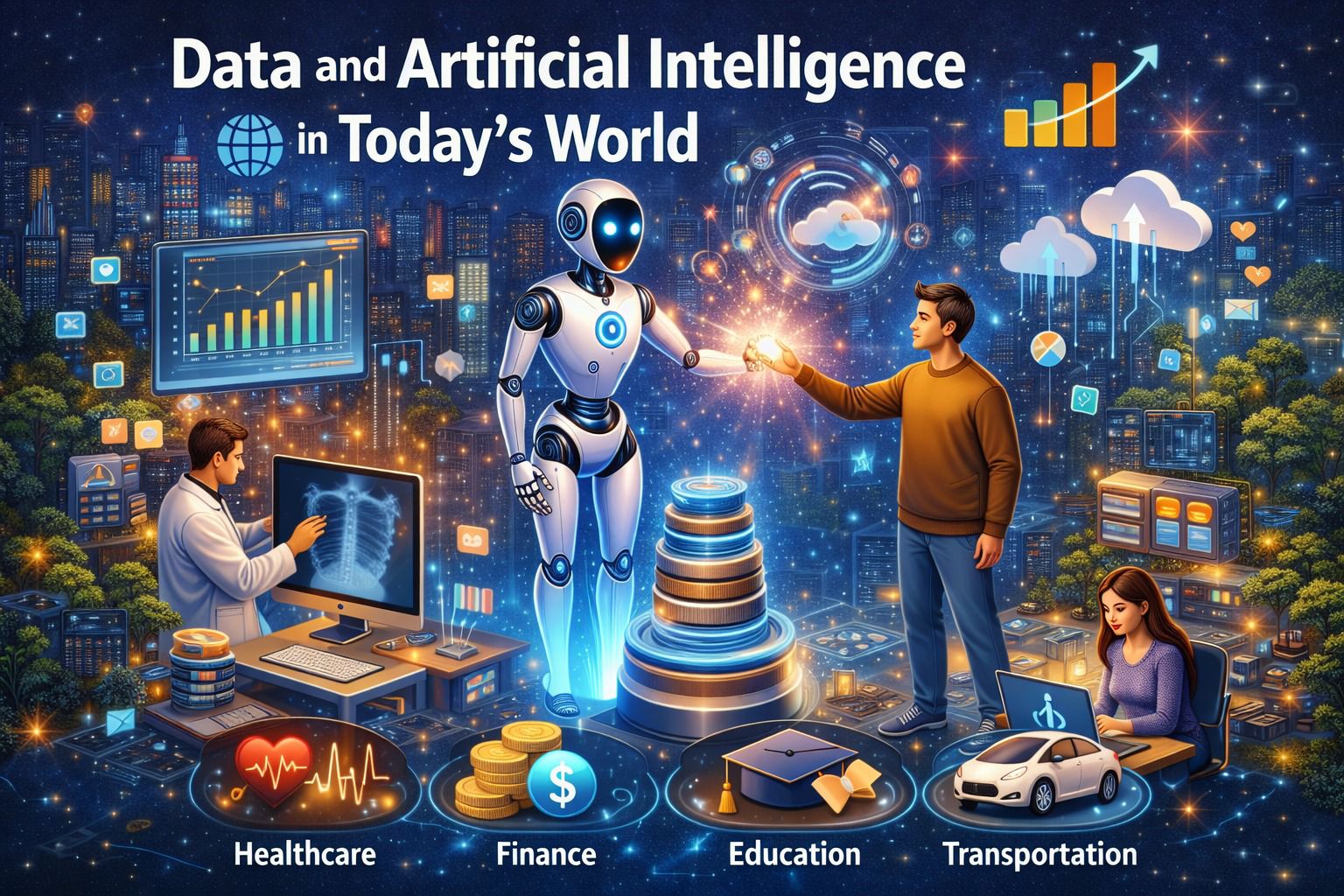
The impact of data and AI can be seen across many industries. In healthcare, AI helps analyze medical scans, predict diseases, and support doctors in making accurate decisions. This can lead to earlier detection of illnesses and better treatment outcomes. In education, AI powered learning platforms can adjust lessons based on a student’s progress, helping each learner receive support that matches their needs. In finance, AI systems monitor transactions to detect unusual activity and prevent fraud. In transportation, AI contributes to traffic management systems and the development of safer vehicles with advanced driver assistance features. Businesses also use AI to understand customer preferences, improve products, and make smarter decisions based on data analysis.
While the benefits are significant, the rise of data and AI also brings important challenges. Privacy is one of the biggest concerns. Since large amounts of personal information are collected, it is important to protect that data and ensure it is used responsibly. Another concern is fairness. AI systems can sometimes develop bias if they are trained on data that is incomplete or unbalanced. This can lead to unfair outcomes. Because of this, researchers and organizations are working to design systems that are transparent, ethical, and reliable. Responsible development is essential to ensure that AI benefits everyone.
Security is another important issue. As more systems become connected, protecting data from cyber threats becomes increasingly critical. Strong security measures, careful data management, and ongoing monitoring are necessary to maintain trust in digital systems. Governments and technology leaders around the world are creating guidelines and regulations to address these concerns while still encouraging innovation.
Looking toward the future, data and artificial intelligence will continue to grow together. As more devices connect to the internet, the amount of available data will increase even further. This will allow AI systems to become more accurate and capable. New advancements are already transforming the way people create content, design products, and solve complex problems. AI is being used in scientific research, environmental monitoring, space exploration, and many other fields. It is becoming a powerful tool for innovation and discovery.
In the end, data and artificial intelligence are not just technical ideas. They are shaping the way people communicate, learn, work, and interact with the world. They influence the apps we use, the services we depend on, and the decisions made by organizations. Understanding how data and AI work helps us become more informed digital citizens. As technology continues to evolve, these tools will remain at the heart of progress, opening new opportunities and transforming the future in ways we are only beginning to imagine. 🚀